Splantzia Square
Splantzia, nestled near the Old Port and renowned as one of Chania’s most distinctive areas, comes highly praised by Lotos Old Town Apartment.
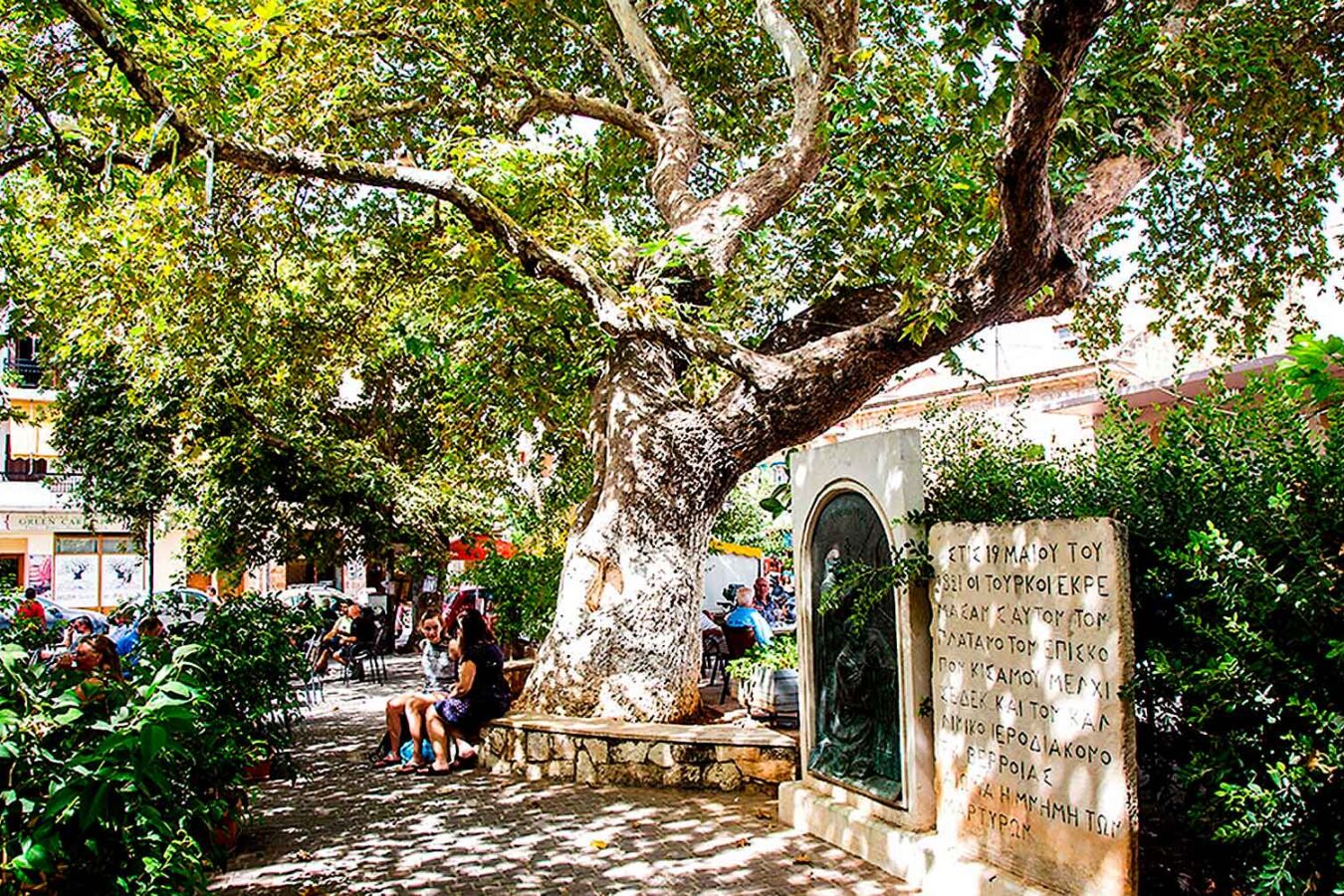
At the heart of this neighborhood, the alluring Splantzia square, also known as 1821 Square in commemoration of the Greek independence movement, invites visitors to gather.
Bordering the square are grand plane trees, providing a cool respite during summer months, creating an enchanting atmosphere in this quaint square.
Splantzia boasts a plethora of quaint shops, vibrant bars, and inviting cafes.
Only those travelers and residents who are well-versed in the area are privy to its hidden gems.
As a result, Splantzia is the perfect destination for relaxing after a leisurely stroll through charming Chania.
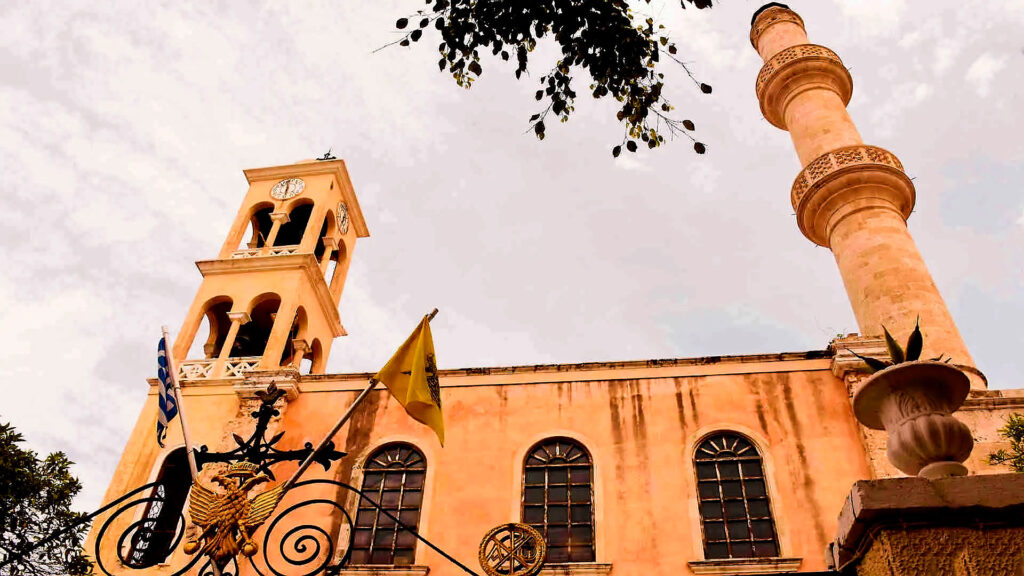
Two of the most renowned churches in Chania can be found near the square.
The grand Agios Nikolaos church, established in AD 1320, stands tall as the largest one. During the Venetian rule, this church was a Dominican convent; however, it was transformed into a mosque under Ottoman rule.
Today, it serves as an Orthodox church, its sheer size and unique features such as a minaret and a bell tower making it impossible to go unnoticed.
Nestled between the Agios Nikolaos church and the plane tree in Splantzia, you’ll find the Turkish underground fountain.
Embraced by railings, this water tank had the capacity to meet Chania’s water needs for as long as six months. Its sheer magnitude is truly astonishing and a testament to the skilled engineering of the Ottoman era.
The Greek revolution of 1821 sent shockwaves through mainland Greece, and even in Splantzia’s central square, a sinister moment in history unfolded. On May 19 of that fateful year, Melchisedek Despotakis, the revered Orthodox bishop of Kissamos, was horrifically hanged from a towering plane tree in the square by the Turkish forces. This brutal act was an attempt to quell the rising rebellion by preventing Greeks from joining in. Along with this gruesome act, a number of prominent Greeks in Chania met their untimely end.
Today, a plaque stands in remembrance of this tragic event, and the square itself is now commonly known as “1821 square” in honor of the fallen.
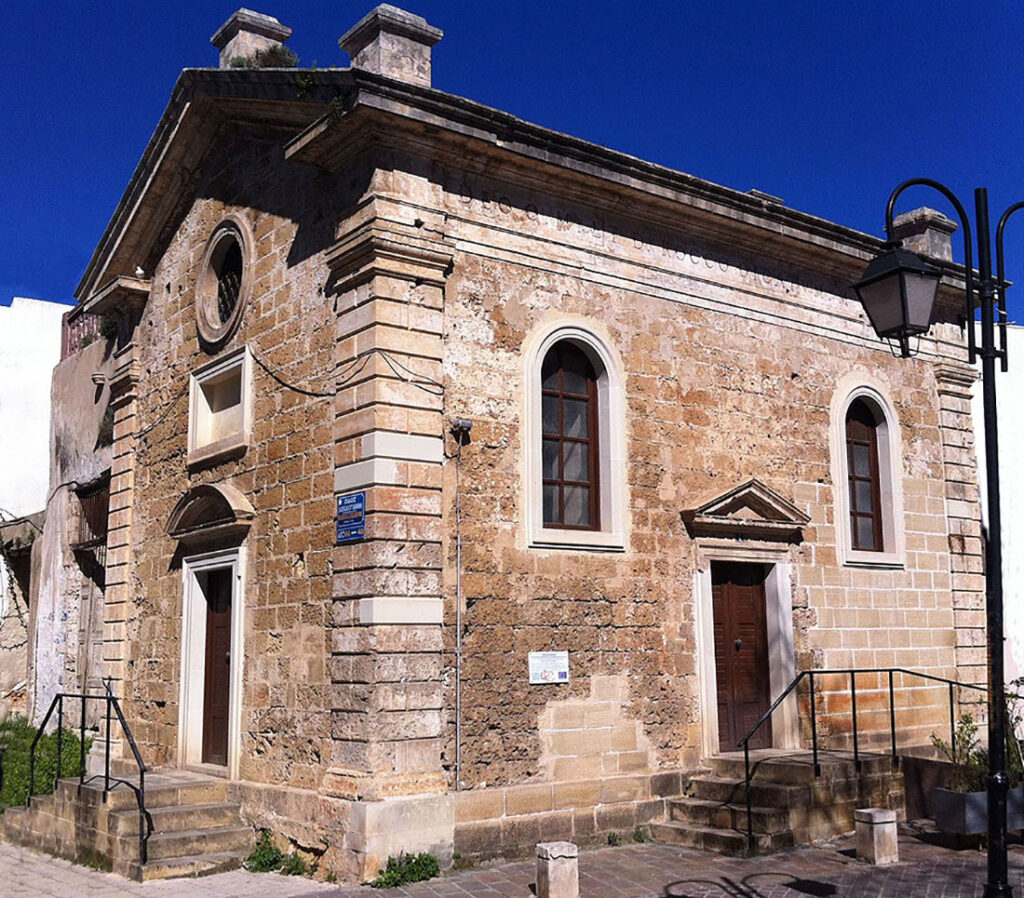
Nestled in Splantzia Square stands the magnificent Agios Roccos Venetian Church.
This historic building, today it is no longer used for religious purposes but as an art space where various photography and painting exhibitions take place.
Interestingly, August 16th marks a special celebration to honor the birth of Saint Roccos, hailing from Montpellier, France in the year 1295.
Legend has it that this church, dedicated to him, was built in the early 1630s following the onset of a devastating plague in Chania.
A tribute to its role as the protector against the sickness, one will find the following inscription below its grand cornice:
DEO O (PTIMO) .M. (AXIMO) ET D (IVO). ROCCO DICATVM. M.D.CXXX.
TO THE EXCELLENT AND GREAT GOD AND TO SAINT ROCCO 1630
During the time of Turkish rule, Agios Roccos was utilized as a military base in Chania. The Ottoman conquerors appeared to be wary of the Saint and his associations with epidemics, as they chose not to demolish the site.
During the Cretan State which was established in 1925, the Agios Roccos served as a gendarmerie station.