Firkas Fortress
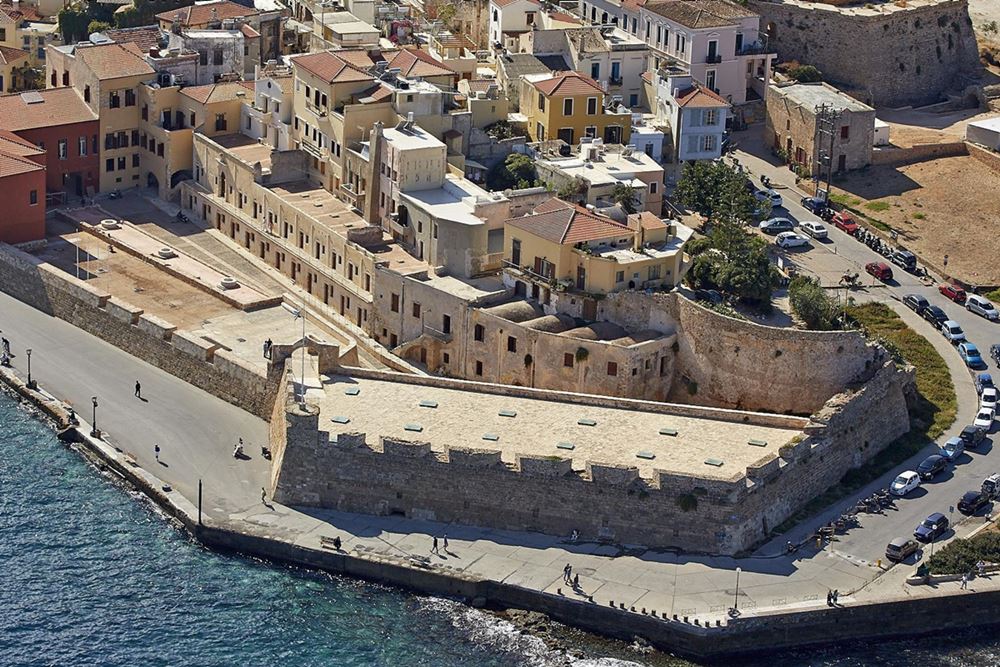
The Revellino del Porto was a defensive project constructed by the Venetians to guard the port on the northwest side of the city of Chania.
It was built in the 16th century and completed just before the city fell to the Turks’ invasion in 1645.
An integral part of the castle’s defense strategy was the imposing chain that stretched from Firkas to the lighthouse, effectively barricading the port during a potential siege.
The Turks used the castle as a barracks and so it got its name that is preserved to this day, as “Firkas” in Turkish means barracks.
On the outside of the wall, one can still make out the locations of the cannons on the fortress’s north side, which faces the port entrance.
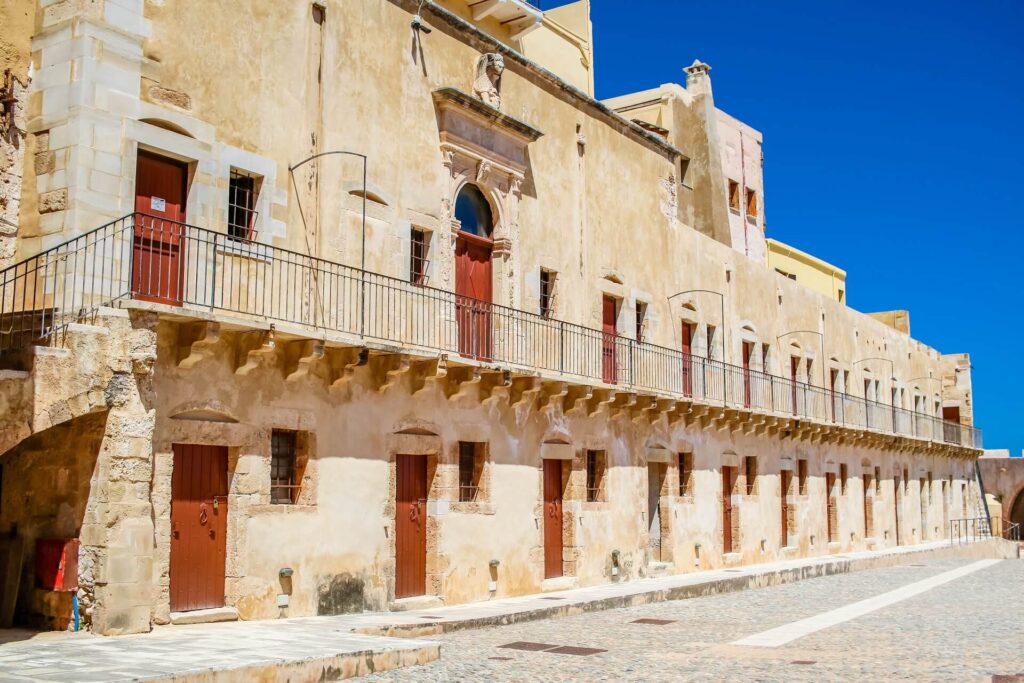
There was a cannon in each of the six vaulted holes along the walls (the openings are now completed), and the rectangular openings above them allowed the shooters to see the shot’s direction and adjust for the next shot.
It had to strike the opposing ships close to the sea’s surface in order to sink them. For this reason, the cannons are positioned at ground level, the lowest point on the walls.
In the corner turret of Firkas, was the place where the flag for the union of Crete with Greece was raised on December 1, 1913, in the presence of the King Konstantinos, the Admiral Koundouriotis, the Prime Minister of Chania Eleftherios Venizelos and many people.
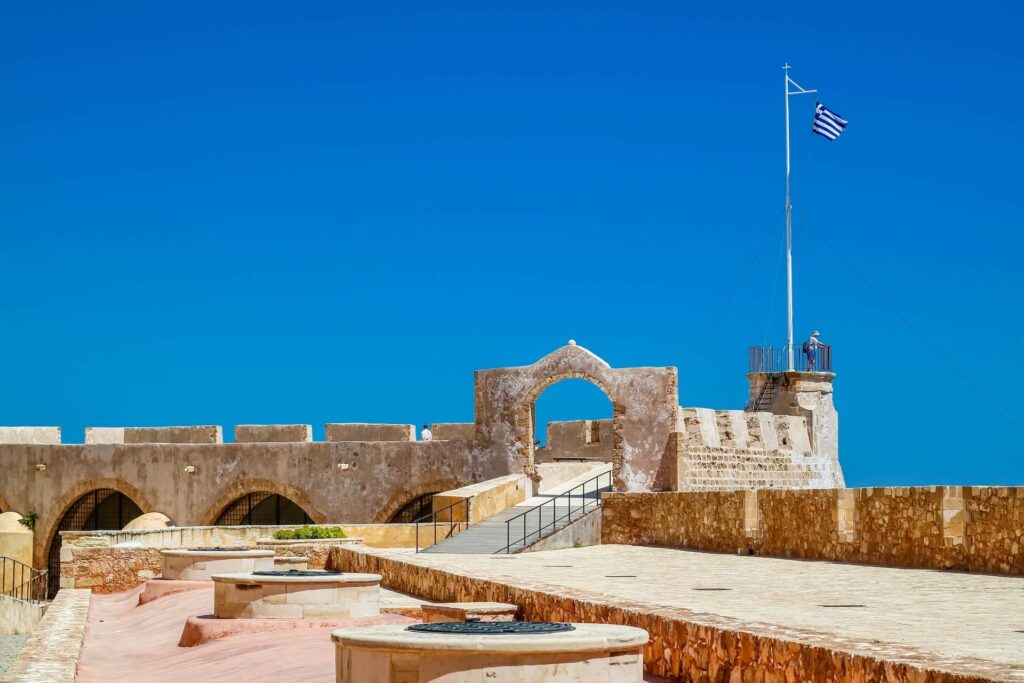
Since then, the blue-white flag of Greece flutters at the turret of the fortress, and the anniversary of the union of Crete with Greece is celebrated every year on December 1, by organizing a similar ceremony at the Firkas fort.
The entrance of the fortress is located on the south side and is identified with the entrance of the current Naval Museum of Crete which is built on the walls and inside the fortress.