The world’s oldest olive tree
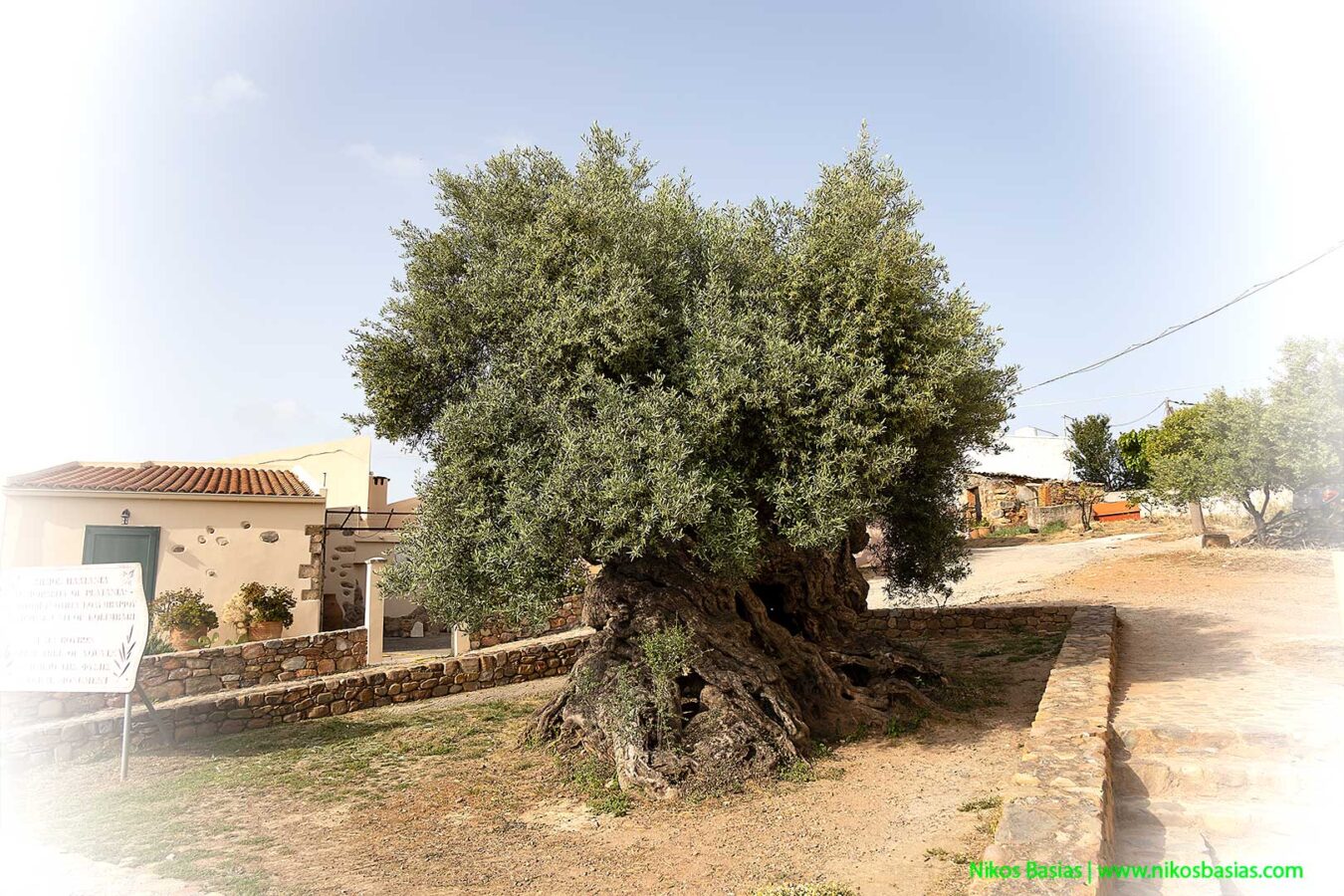
The olive tree in Vouves is believed to be the oldest olive tree in the world, estimated to be between 3,000 and 5,000 years old, and it still bears fruit today!
This olive tree has been recognized as a “Monumental” tree due to its unique shape and the remarkable aesthetics of its trunk’s relief.
Located in Pano Vouves in the Municipality of Platanias, this tree belongs to the Mastoid variety, locally known as “Tsounati”.
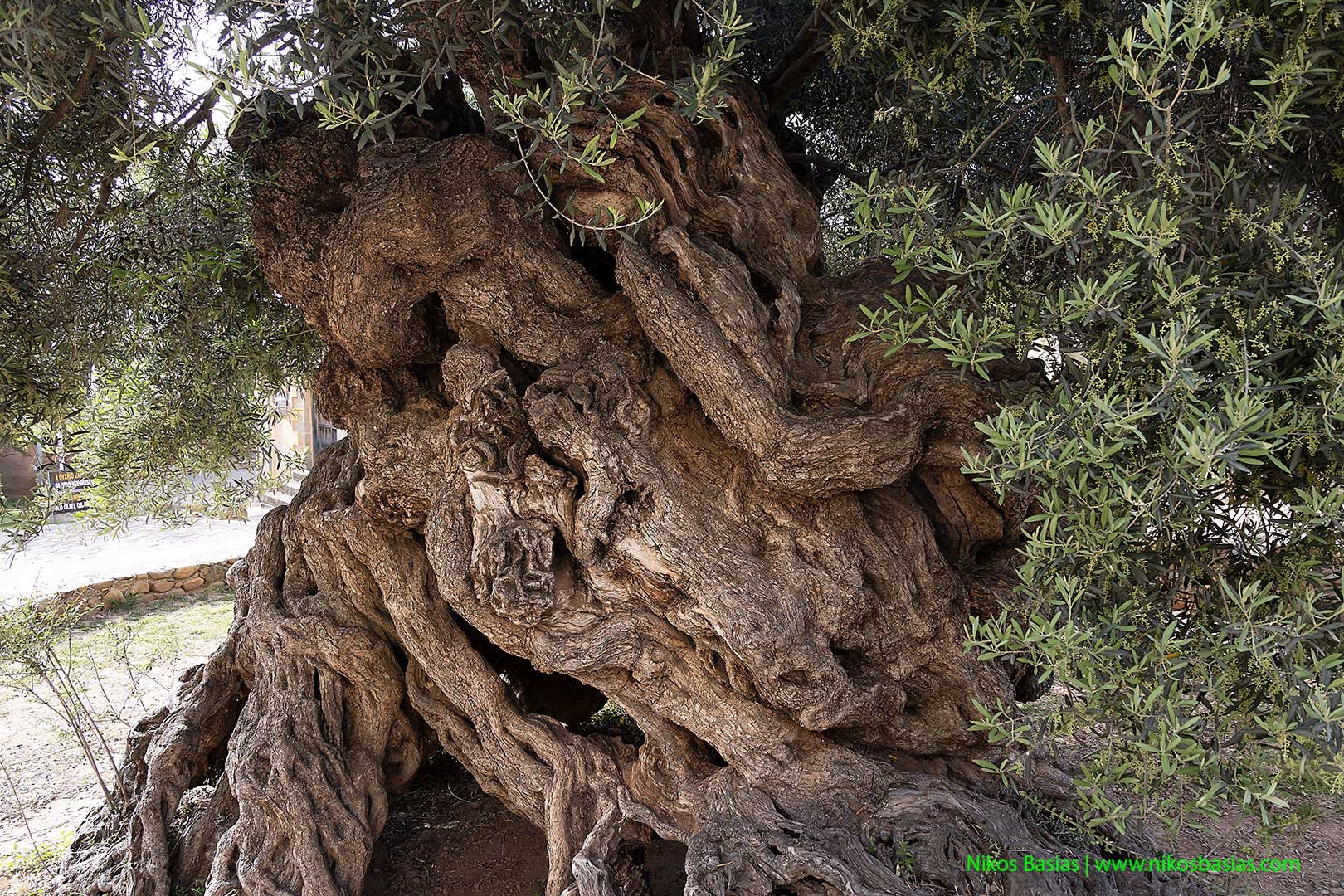
The tree’s trunk features an impressive relief with unique aesthetics, resembling various forms that appear like strange faces and objects, making it a true work of art.
The tree has also been declared a Monument of Nature. A branch from this tree was used to crown the first-place winner of the Men’s Marathon at the 2004 Athens Olympic Games, as well as the winners at the 2008 Beijing Games, the 2012 London Games, and the 2016 Rio de Janeiro Games.
At a height of 0.9 meters from the ground, the trunk of the tree measures 3.70 meters in diameter and has a circumference of 8.10 meters. At the base, the trunk has a maximum diameter of 4.53 meters and a circumference of 12.55 meters.
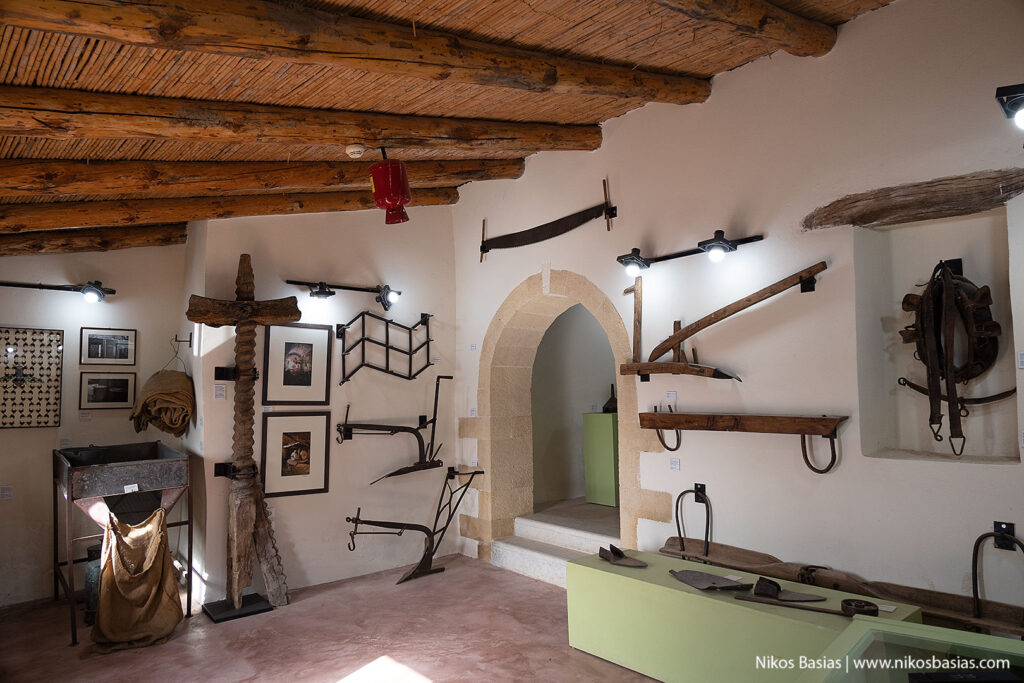
The Olive Museum of Vouves is located near the Monumental Olive Tree of Vouves, forming a cohesive and harmonious ensemble with it. The museum is housed in a traditional building that preserves all the characteristic elements of the area’s simple yet authentic, intelligent, and functional folk architecture.
The museum’s exhibits cover the entire process of olive oil cultivation, from harvesting and production to transport and storage, as practiced from ancient times until the mid-1950s.
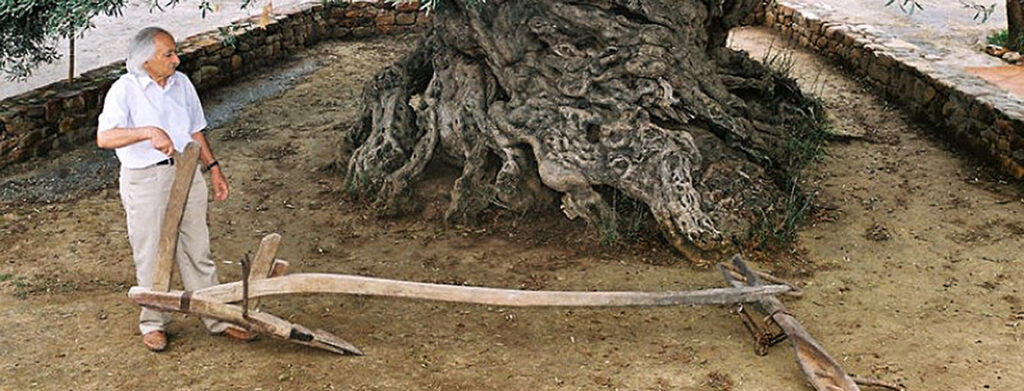
Among the exhibits, you can even find the Hesiod plow. This ancient wooden plowing tool was used by locals to cultivate the land from prehistoric times until the 1950s. According to tradition, it was discovered by Triptolemus, an Eleusinian hero from mythology. Triptolemus assisted the goddess of agriculture, Demeter, in finding her daughter Persephone, and in gratitude, Demeter taught him how to cultivate wheat. This need led Triptolemus to invent the plow. In history, it is known as the Hesiod plow because Hesiod was the first to describe it in detail and explain its various components.