Samaria Gorge
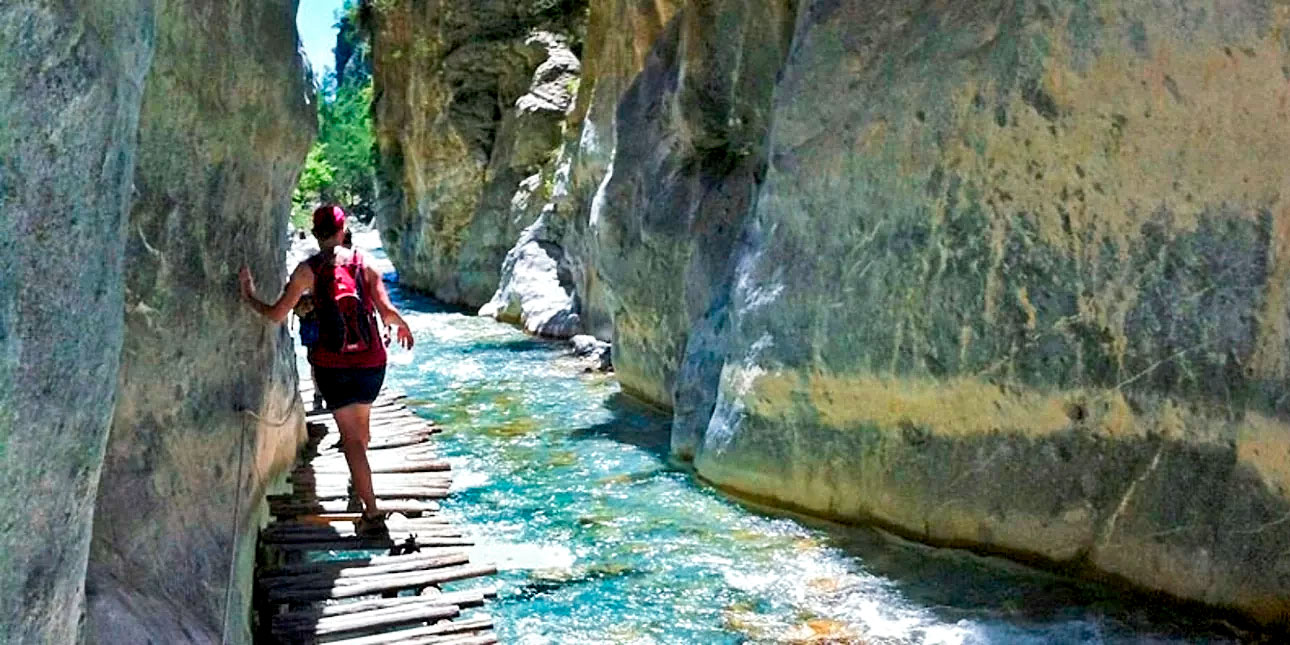
Many tourists arrive in Crete with the primary goal of crossing Samaria Gorge, the largest in Greece and the second longest in Europe.
It is situated on the southern portion of the Chania Prefecture.
Depending on your speed, the 16 kilometer descent from Omalos to Agia Roumeli might take anywhere from 5 to 7 hours.
The tiny Byzantine church in the center of the Gorge, known as Osia Maria, was constructed in 1379 and is the source of the name Samaria Gorge. The little chapel next to which the settlement of “Samaria” was constructed served as the inspiration for the village’s name. Following the National Park’s declaration in 1962, the village’s long-term residents left. Rangers from the National Park and hikers utilize it as a rest point these days.
While the main gorge meets much smaller ones along the way, some claim that the name derives from the term “Amara” (meaning the site where many streams meet, etc.).
The geological reorganizations in the region are thought to have fractured the stone masses approximately 14 million years ago, creating the canyon of Samaria, or “o Faragas” as the people of Sfakia refer to it.
Numerous endemic species of flora and wildlife may be found in the gorge and its environs, the most well-known of which is the Cretan Goat, also known by its common name, Kri-Kri.
Since the gorge is a national park, camping, overnight stays, bonfires, and swimming in the rivers are all prohibited. Also prohibited is cutting vegetation while traveling.
The most well-known feature of the gorge is the area known as Portes (Doors) or Sideroportes (Iron Doors), where two persons can touch its 600-meter-tall walls with their outstretched arms!
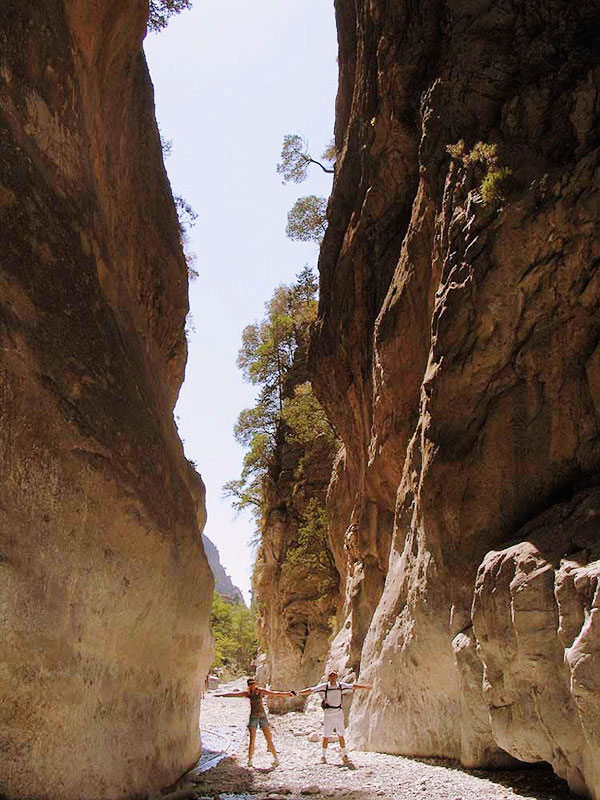
About an hour after the “village” of Samaria, you will encounter them.
If you feel loved or if you want someone to say to you “I love you”, when you arrive at the “Portes” shout loudly “I love you”. The echo will definitely reply, not once but many times!
Nearly the whole way, there are built-in fountains where you can get drinking water. Additionally, there are restrooms spread out across the gorge.
We advise you to take the first bus from Chania in the morning to avoid the heat in the gorge.
It’s a good idea to arrive at the Samaria Gorge in light clothing, wearing hiking boots—the well-known mountaineering boots—carrying light food, and, of course, a hat and sunscreen.
The South Cretan Sea is where the gorge finishes, and visitors can catch the return boat that departs from Agia Roumeli for Chora Sfakion or Sougia which has one of the best beaches in Chania and Crete.